English

Industrial display solutions for engineers designing HMI and embedded systems in India
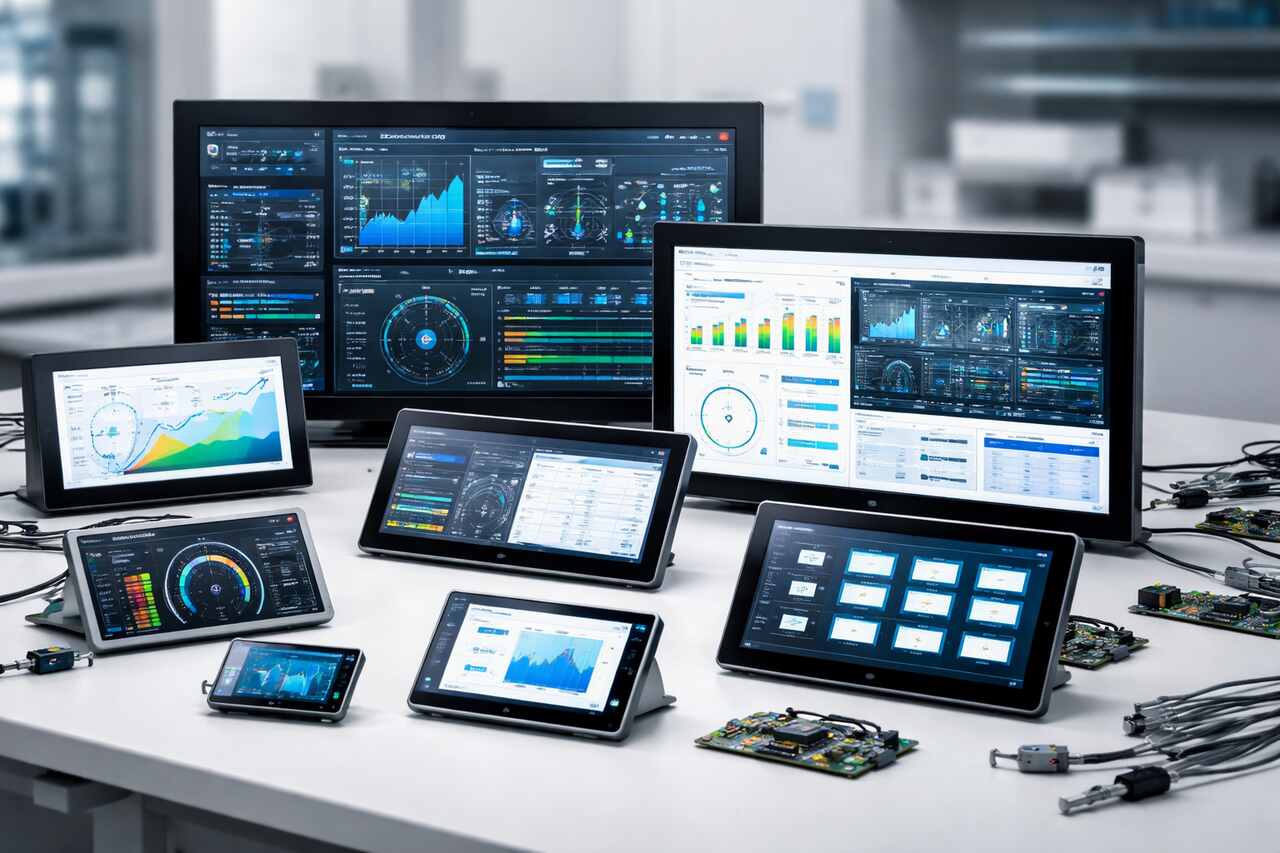
The industrial display solutions selected for an engineering project can determine whether equipment remains reliable, readable, and easy to maintain over time.
In this scenario, many engineers struggle with screens that fail under sunlight, become unavailable after a few years, or do not integrate easily with HMI systems.
And in a world where the global industrial display market is expected to reach USD 8.65 billion by 2030.
Understanding display technologies, component availability, durability, and integration requirements is becoming increasingly important for industrial applications.
Why industrial display solutions are critical for modern engineering applications
Industrial display solutions make industrial systems more reliable, easier to operate, and faster to maintain, because they improve machine visibility, reduce human error, and support stable communication between operators and equipment.
It’s no coincidence that the global industrial display market is expected to reach USD 8.65 billion by 2030, growing at 6.7% annually between 2025 and 2030, according to Grand View Research.
This expansion is being driven by the increasing use of HMI interfaces in machines, production lines, and embedded systems.
As manufacturers demand more productivity and less downtime, industrial display solutions are becoming a critical part of engineering projects across industries.
Trends driving demand for industrial displays in India
Two major trends are accelerating demand: the rapid expansion of industrial automation and smart manufacturing, and the increasing integration of HMI interfaces into equipment.
Industrial automation and smart manufacturing
Factories in India are investing heavily in Industry 4.0, robotics, and connected production systems.
These environments require displays that can communicate with sensors, PLCs, and machine controllers in real time.
Modern production lines also need interfaces that simplify monitoring and reduce response time.
Industrial display solutions support this transition by making data easier to visualize and manage.
The result is greater efficiency, fewer interruptions, and more consistent output.
Increasing use of HMI interfaces in equipment
More industrial equipment now includes HMI screens to improve interaction between operators and machines.
From packaging equipment to medical devices, these interfaces help users monitor status, change settings, and identify failures faster.
That’s precisely why demand is increasing for touch-enabled, high-resolution displays that are easy to integrate.
Engineering challenges when sourcing display components
Engineers often face two major concerns when selecting display components: unstable supply chains and the need for long-term product support.
- Supply chain disruptions and component availability: display panels, drivers, and touch controllers may become unavailable without notice. This can delay production, increase redesign costs, and force engineers to qualify alternative components.
- Long product life cycle requirements for industrial systems: industrial machines often remain in operation for ten years or more. For this reason, display suppliers must guarantee stable availability, technical support, and backward compatibility.
Key elements of a complete industrial display solution
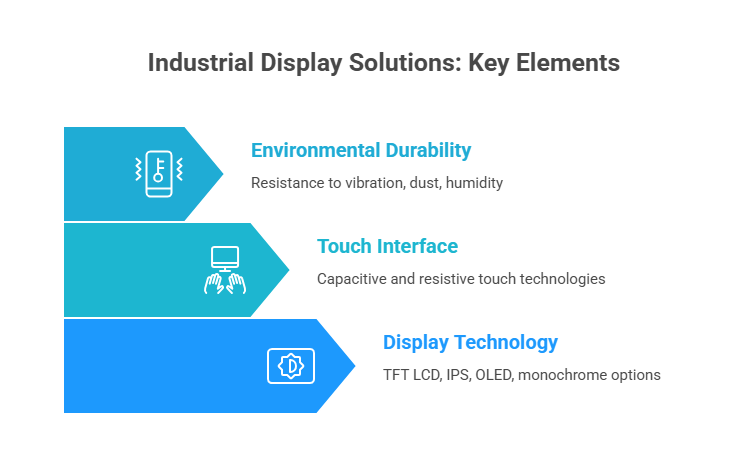
A reliable display project depends on the right technology, interface, and durability level.
- Display technology selection: TFT LCD, IPS, OLED, and monochrome displays each offer different advantages.
- Touch interface integration: capacitive and resistive touch technologies are designed for different operating conditions.
- Environmental durability and reliability: industrial displays must resist vibration, dust, humidity, temperature changes, and long operating hours.
Design considerations for engineers working with industrial displays
Brightness and readability in harsh environments
Industrial equipment is often used outdoors or in areas with strong ambient light.
Engineers should prioritize high-brightness displays, anti-glare coatings, and wide viewing angles.
Power consumption and thermal management
Displays with high brightness and advanced graphics may generate more heat and consume more power.
Efficient backlight systems, low-power controllers, and optimized ventilation improve reliability and reduce costs.
Long-term component availability
Selecting suppliers with stable production plans and long-term support helps avoid redesigns.
Rely on Proculus for industrial displays in India
Proculus develops complete display platforms for companies that need reliability, flexibility, and technical support.
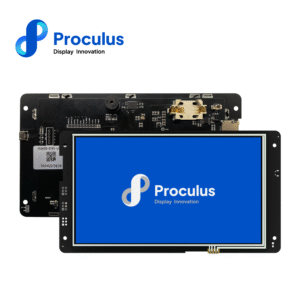
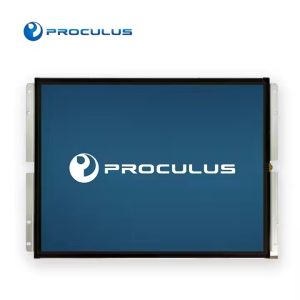
As a specialized TFT LCD and LCM manufacturer, we offer UART, Android, and HDMI solutions.
With ISO 9001 certification, customized R&D services, and a strong focus on transparency and innovation, Proculus helps manufacturers implement industrial display solutions that remain stable throughout the entire product lifecycle.
Check out the video below to learn more about our solutions:
Discover the right display platform for your next project. Talk to Proculus and request a customized solution today.
FAQ about industrial display solutions
What is the difference between industrial and commercial displays?
Industrial displays are designed to operate in harsh environments with dust, vibration, humidity, and temperature variation.
Which display size is best for industrial equipment?
The best size depends on the available space, operator distance, and amount of information shown on screen.
When should engineers choose capacitive touch screens?
Capacitive touch screens are recommended when the application requires fast response and multi-touch capability.
Can industrial displays be customized for specific applications?
Yes. Manufacturers can customize screen size, brightness, connectors, touch technology, and interfaces.
Which communication interfaces are commonly used in industrial displays?
Common interfaces include UART, HDMI, USB, SPI, LVDS, and Ethernet.