 English

Blog
Making Linux Work for Industrial Displays: Proculus Linux LCMs with System-Level Support
In embedded systems and industrial display applications, long-term stability, controllability, and customization matter far more than novelty. Beyond Android-based solutions, Linux has become the preferred operating system for industrial HMI, control panels, edge devices, and dedicated terminals.

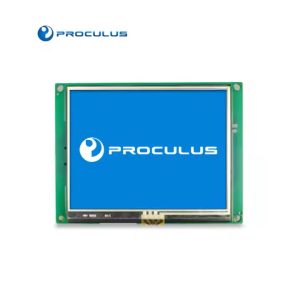
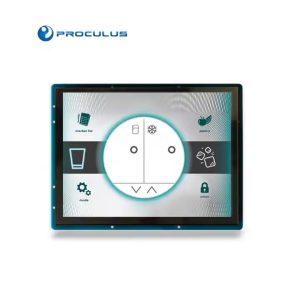
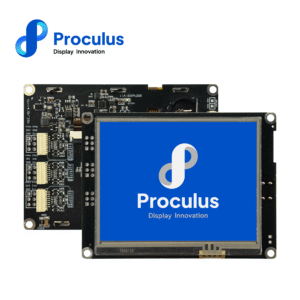
Proculus provides high-performance display modules with validated Linux system support, enabling customers with Linux experience to move from development to real-world deployment efficiently and reliably.

Why Choose Linux for Embedded and Industrial Applications?

Linux is an open, modular, and highly configurable operating system, making it particularly suitable for industrial environments:
-
Highly customizable – Only required components are retained, improving reliability and responsiveness
-
Designed for long-term operation – Ideal for 24/7 industrial and commercial systems
-
Open ecosystem – Compatible with a wide range of drivers, middleware, and application frameworks
-
Full system control – Update cycles, security policies, and system permissions remain fully under customer control
For projects that do not rely on a mobile application ecosystem but prioritize stability, lifecycle management, and system ownership, Linux is a rational and proven choice.

Deploying Linux on Proculus Industrial LCMs

Based on high-performance Rockchip processors, Proculus provides Linux support across a broad range of LCMs, including—but not limited to—RK3288, RK3568, and RK3562.

These platforms are widely used in industrial HMI, smart terminals, information displays, and edge computing systems, offering mature CPU performance, graphics capabilities, multiple display interfaces, and industrial-grade stability.

Note: Linux kernel versions and validated distributions may vary by chipset and product. The final system configuration is confirmed by the technical team based on project requirements.

On Proculus Linux LCMs, customers can focus on application development and system deployment without building the system from scratch:
-
Rapid onboarding: Pre-validated system images, drivers, and development documentation allow immediate hardware verification and evaluation.
-
Application development support: Qt-based GUI development and customized UI frameworks are supported for multi-resolution and multi-display scenarios.
-
Debugging and optimization: SSH access, serial debugging, example programs, and interface documentation help accelerate functional validation and performance tuning.
-
System customization: Display parameters, permissions, and update strategies can be tailored to ensure long-term stability and industrial-grade operation.
With this approach, Proculus platforms can be efficiently transformed into reliable, production-ready embedded or industrial systems.

Linux vs. Android: System Selection Reference

Linux and Android are not competing technologies—they serve different application needs:

1. Android is suitable for
-
Rich multimedia and visual interaction
-
Access to a complete application ecosystem
-
Consumer or light-industrial devices
2. Linux is suitable for
-
Long-term continuous operation
-
Fixed or highly customized user interfaces
-
Industrial control, information display, and dedicated terminals
-
Projects requiring strict system control and long lifecycle management
Proculus LCMs are available with both Linux and Android systems, allowing customers to select the operating system that best matches their application scenario and product lifecycle.

Linux Deployment Workflow Overview

For customers with Linux experience, Proculus provides documentation and guidance to streamline deployment:

1. Development environment preparation
-
Cross-compilation toolchain setup
-
Linux development environment (commonly Ubuntu/Debian)
-
Access to validated system images and drivers
2. System flashing and startup
-
Flashing Bootloader, Kernel, and RootFS via SD card or eMMC
-
Initial power-on verification via serial or network
3. Application development and debugging
-
GUI development using Qt or custom frameworks
-
Debugging via SSH, serial console, and system tools
-
Kernel module loading and performance tuning
4. System optimization and customization
-
Kernel and system trimming to reduce footprint
-
Display, touch, and multi-interface configuration
-
Permission and update policy definition
5. Deployment and maintenance
-
System optimization aligned with hardware capabilities
-
Lifecycle-based update planning
-
Ongoing technical support and version validation
Conclusion

In industrial and embedded display applications, operating system selection should be based on suitability—not trends. By providing comprehensive Linux system support, Proculus delivers more than display modules or core boards. We offer a deployable, controllable, and reliable system foundation, enabling customers to move efficiently from development to long-term operation with confidence.


PHP Code Snippets Powered By : XYZScripts.com